Switzerland has a reputation.
Expensive. Breathtaking. The kind of destination people pin to a dream board and then quietly talk themselves out of because it feels like it is only for other people.
The ones with old money, a trust fund, or a specific kind of life that does not include checking the exchange rate before ordering water at a restaurant.
Yes, I did check the exchange rate before ordering water at a restaurant.
And I still think Switzerland is one of the most beautiful countries I have ever been to.
So if you are trying to decide whether Switzerland is worth the price — especially as a Canadian traveler weighing flights, food, transit, tours, and whether this trip is actually realistic — this is the honest version.
I booked this trip for my grandmother and me on Aeroplan points. We flew Swiss Airlines business class from Toronto to Zurich, then continued on to Singapore, all on one booking. It was two countries, but only one redemption. At it cost me $232 CAD each in taxes and fees.
The flight was not the expensive part (obvs).
What came after was.
For a comfortable Switzerland trip, I would budget at least $200 to $300 CAD per person per day, not including flights or accommodations. That assumes regular meals, public transit or tours, paid experiences, and enough flexibility that you are not backpacking your way through the country on the tightest possible budget.
Switzerland is expensive. I’m not going to sugarcoat it. And yes, that is relative to other parts of the world, but the comparison matters when you are deciding where your travel budget should go.
But it also delivered on the cost in a way I have not always found to be true in expensive destinations.
This post is my honest answer to the question I get asked more than almost any other about this trip: is Switzerland worth visiting?
The quick answer: yes. Switzerland is the most expensive country I have ever visited, and I would go back tomorrow.
But how worth it is depends on what you are going for, how you travel, and where you can realistically reduce costs.
I will break down what felt worth the splurge, which costs were harder to justify, where we went in Zurich, Lucerne, Mt. Pilatus, Lake Lucerne, and Appenzell. I'll share why Switzerland worked so well for a slower trip with my grandmother.
I will also explain how using Aeroplan points made the flight the cheapest part of the trip, because that is what helped make this trip feel possible.
This is the overview post for my full Switzerland travel guide, so you can decide whether Switzerland belongs on your own travel list before diving into the detailed cost breakdowns, itinerary posts, hotel review, food recommendations, day tours, and points strategy.
Is Switzerland Worth Visiting? The Honest Answer
It depends on who you are asking and what matters to you when you travel.
If you need a destination that is budget-friendly, fast-paced, and packed with nightlife and cheap street food, Switzerland is not your answer.
Go to Portugal. Go to Mexico. You will have a wonderful time.
But if you are looking for scenery that actually stops you in your tracks, food that tastes like it was grown three miles away, beautiful public transit, mountain views, lake towns, and pockets of quiet where you can slow down without feeling like you are missing the whole point of the trip, Switzerland earns every expensive franc.
I do not want to pretend Switzerland is calm everywhere.
Zurich’s central train station is busy. Mt. Pilatus still has lines. Popular viewpoints are popular for a reason. You are not walking into a silent wellness retreat the second you land.
But compared to many other European trips I have taken, Switzerland gave us more access to slower, easier moments.
The countryside. The boat rides. The smaller towns. The way the transit worked. The fact that we could base ourselves in one place and still see mountains, lakes, farms, restaurants, spas, and city streets without constantly repacking our bags.
That mattered.
I am someone who travels with chronic pain and is deeply sensitive to overstimulation. Switzerland was not magically quiet everywhere, but it offered enough slower spaces that I could actually enjoy the trip instead of feeling like I was forcing myself through it.
I did not leave Switzerland feeling like I needed to recover from my vacation.
I came home feeling like the trip had given me something back.
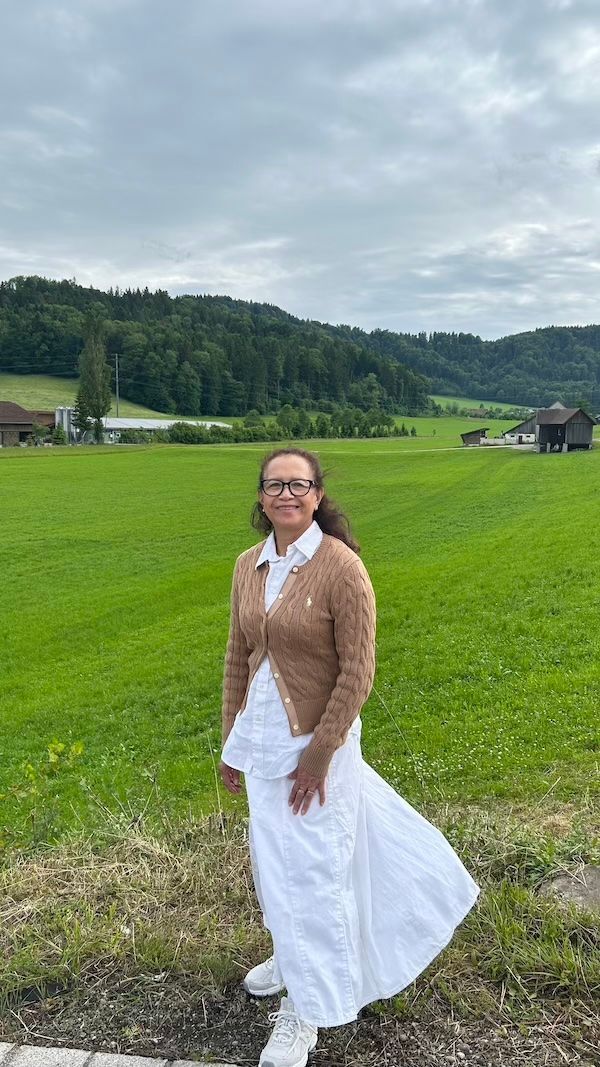
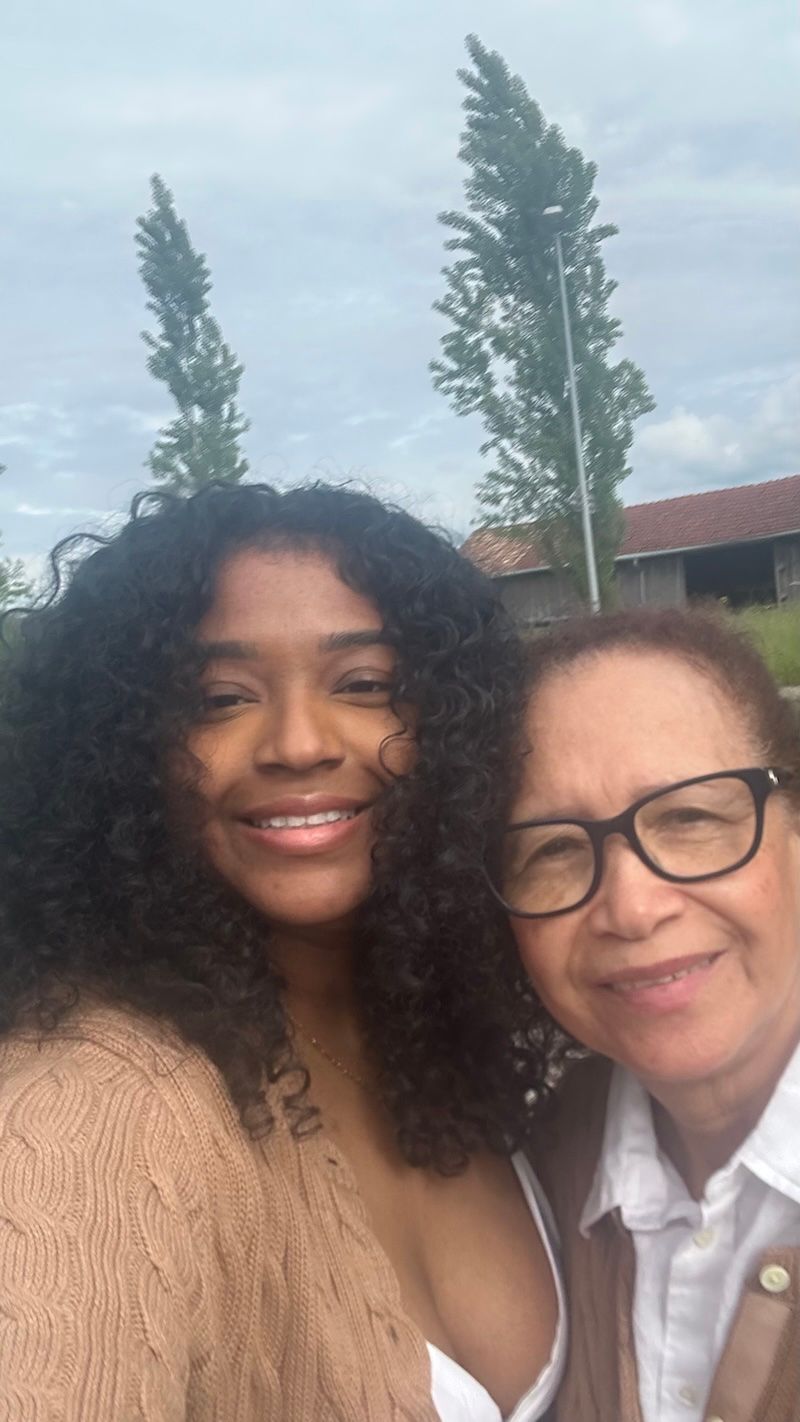
My grandmother was with me. Watching her take in the mountains in Appenzell, standing in the middle of a field she had never seen anything like, not saying much because she did not need to — that was worth it.
Who Switzerland Is Right For
Switzerland is a good fit for:
- Slow travelers who want to absorb a place rather than check it off
- Travelers who like having access to quieter towns, lake cruises, countryside, and scenic transportation
- Introverts or sensitive travelers who want breaks from busier European city energy
- Travelers who value food quality over food quantity
- People traveling with older family members or anyone for whom comfort is not optional
- Travelers who can absorb higher daily costs in exchange for a lower-stress experience
- Canadians who can use points to reduce the cost of getting there
Switzerland worked especially well for us because this was not a “wake up at 6 a.m. and see eight things before dinner” trip.
I was traveling with my grandmother, managing my own chronic pain, and trying to build a trip that felt beautiful without feeling punishing.
Switzerland made that easier because there were so many slower pockets to build the trip around.
Who Might Struggle With Switzerland
Switzerland may not be the best choice for:
- Budget travelers
- People who need a packed itinerary to feel like they got their money’s worth
- Travelers expecting the same energy as Paris or Rome
- Anyone who feels stressed by expensive day-to-day costs
- People who want nightlife, chaos, and cheap meals on every corner
- Travelers who get frustrated by paying more for comfort, convenience, or scenery
That is not a criticism of Switzerland.
It is just not that kind of destination.
Switzerland is expensive, scenic, orderly, and very easy to structure as a slower trip if that is what you want.
That is the feature, not the flaw.
What Actually Surprised Me About Switzerland
I did not do as much research before this trip as I normally would.
In fact, I booked our hotel while we were sitting in the lounge at the Toronto airport.
So I was genuinely surprised by how much open availability there still was once we were in Switzerland. Maybe it was the time of year, because we visited in May, but I did not run into the kind of week-long waitlists or impossible booking situations I expected from a destination this expensive and popular.
That made the trip feel more manageable than I thought it would.
I expected beautiful.
Obviously. It is Switzerland.
But I did not expect Switzerland to be as easy to move through as it was.
There is a difference.
Beautiful can be chaotic, overwhelming, and loud. Paris is beautiful. Venice is beautiful. Rome is beautiful.
Switzerland was beautiful too, but the version we experienced moved at a pace where I felt like I could actually take it in.
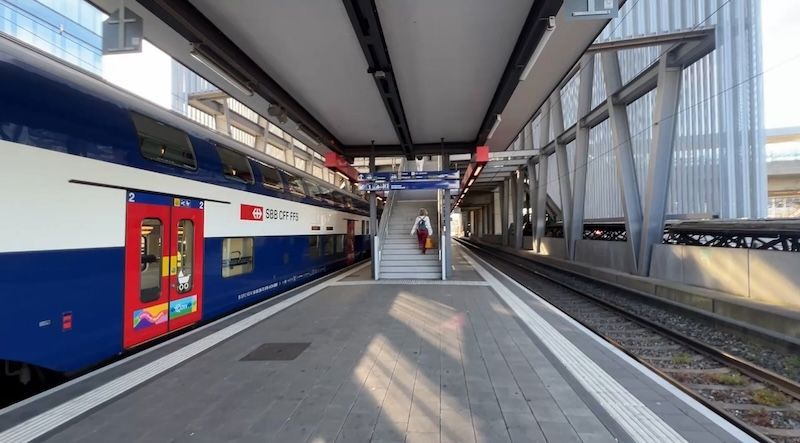
We got to cross Lake Lucerne by boat. We spent time in the Appenzell countryside. We had space to sit after dinner without feeling rushed. One of my favorite parts was treating myself to a spa day, taking the train back to Kloten, and not feeling like we had failed the itinerary by resting.
That was the part I had not fully understood before going.
For someone who manages chronic pain and sensory overload as part of daily life, this mattered.
It meant I could enjoy the trip while I was on it instead of pushing through and collapsing later.
The other thing I did not expect was how diverse the food scene felt.
I had a very narrow idea of Swiss food before we arrived: cheese, chocolate, fondue, maybe some bread and potatoes. And yes, all of that exists.
But Switzerland, or at least the parts we visited, had far more international food than I expected.
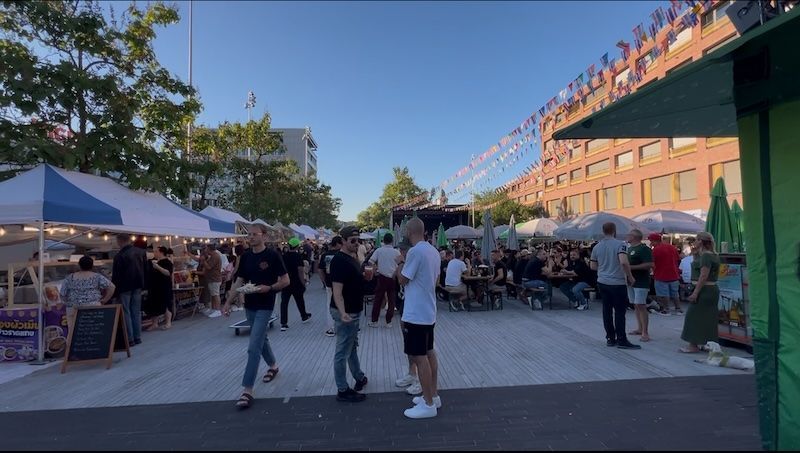
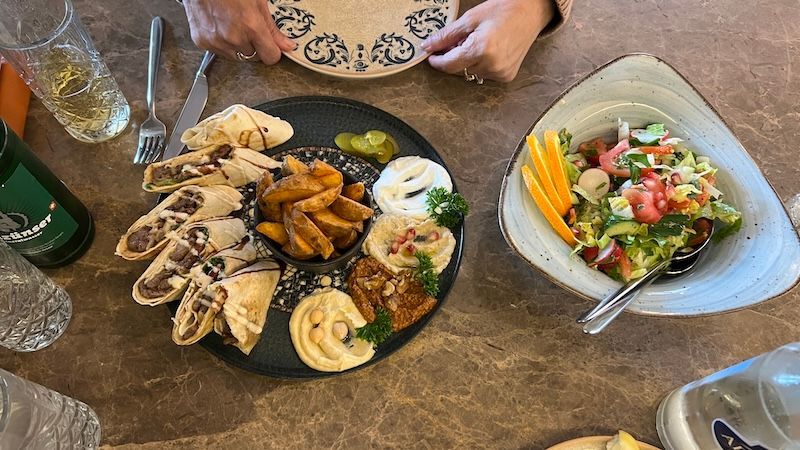
We ate at a Middle Eastern restaurant near our hotel more than once. During the local street holiday, I noticed different kinds of food, clothing, and people moving through the streets in a way that made the country feel much more layered than the postcard version of Switzerland I had in my head.
The street holiday itself was lively.
Honestly, it was a little loud for me by that point in the day.
We did not stay long or settle in for the whole thing. We mostly passed through, took it in, noticed the food and clothes, and kept moving to dinner. If I had not been so tired, I probably would have enjoyed browsing a bit more.
But even passing through it changed my impression of Switzerland.
I had pictured the country as reserved, serious, and a lot more luxurious in a formal way. Then we walked through a street party and I realized I had only understood one version of it.
I was also surprised by how normal everyday life felt.
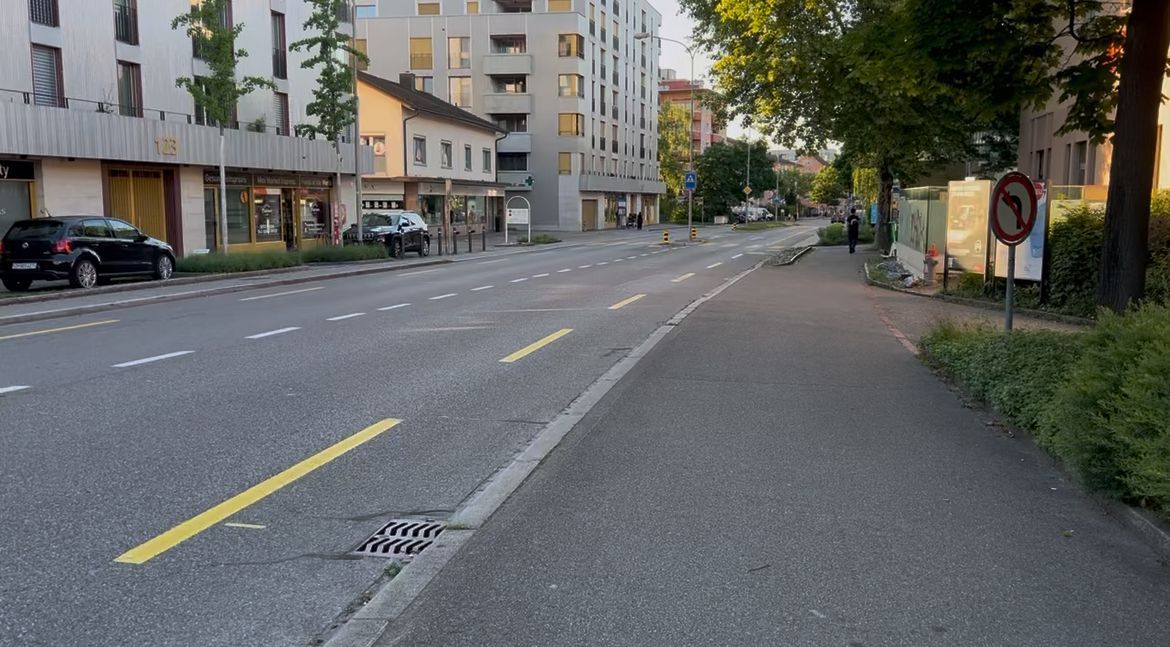
People were dressed casually. Public transportation was full of regular commuters, travelers, families, and people just going about their day. The trains came often enough that the system felt usable instead of intimidating.
I do not know exactly what I expected. Maybe fancier clothes. Maybe more obvious luxury. Maybe something more polished than practical.
And maybe those areas exist.
But it was nice to notice the similarities too. Even as an avid traveler, I can still make up unfounded expectations in my head about a place before I get there.
Switzerland reminded me that a country can be expensive and beautiful without feeling untouchable.
How Much Does a Trip to Switzerland Cost?
Switzerland is not a destination where you can fully escape the cost.
You can be strategic. You can use points for flights. You can stay outside the city center. You can buy some grocery meals. You can choose the experiences that matter most.
But Switzerland is still expensive once you are there.
For a comfortable trip, I would estimate
$200 to $300 CAD per person per day, not including flights and accommodations.
That daily budget covers things like:
- Meals
- Coffee and snacks
- Local transportation
- Paid experiences
- Day tours
- Occasional rideshares
- Small purchases
- Entry fees or spa visits
This is not a luxury daily budget. It is a realistic comfort budget.
The biggest surprise for me was that the flight, which should have been one of the most expensive parts, ended up being the cheapest piece of the trip because we used Aeroplan points.
We paid
$232 CAD each in taxes and fees to fly Swiss Airlines business class from Toronto to Zurich as part of a larger Aeroplan booking.
The country was expensive.
The flight was not.
That difference is why I think Switzerland is especially interesting for Canadian travelers who collect points. You may not be able to make Switzerland cheap, but you can make the most painful upfront cost much easier to absorb.
Where We Went in Switzerland
We based ourselves in
Kloten, the municipality right next to Zurich Airport.
That turned out to be a genuinely smart choice.
We stayed at
Hotel Allegra Lodge, which was one minute from the public transit hub. The prices were more reasonable than central Zurich, and every train or tour bus we needed was accessible without complicated logistics.
From that base, we visited:
- Zurich
- Lucerne
- Mt. Pilatus
- Lake Lucerne
- Appenzell
- A Swiss cheese factory
- A chocolate factory
- Hürlimannbad Spa
For a first trip to Switzerland, Zurich, Lucerne, Mt. Pilatus, and Appenzell gave us a good mix of city, lake, mountain, and countryside without making the itinerary feel frantic.
This was important to me because I was in vacation mode.
I did bring work with me, but I barely touched it. I am still figuring out how to incorporate more rest into my vacations instead of treating every trip like something I need to optimize. Being with my grandma helped with that. It made me more present and in the moment, instead of sitting on my laptop trying to get through my to-do list.
This was not a trip where I wanted to drag my grandmother through a new hotel every night.
I wanted a beautiful trip that still felt manageable.
And since we were only in Switzerland for five days, staying in one place made the whole trip easier.
Choosing Kloten helped make that happen. It gave us a simple home base, easy access to transit, and enough flexibility to see a lot without constantly packing, checking in, checking out, and starting over.
Zurich: The City That Felt Surprisingly Livable
Zurich surprised me with how livable it felt.
It did not feel like a tourist trap. It felt like a real city with real restaurants, real streets, and a pace that made it easy to exist rather than perform.
We ate well here multiple times, visited Hürlimannbad Spa, and used Zurich as our home base for everything else.
Kloten specifically is underrated for travelers who want easy airport access without the price tag of central Zurich. Staying near the airport would not be my default advice in every city, but for this trip, it worked beautifully.
If you are flying in late, traveling with an older family member, managing pain or fatigue, or trying to keep logistics simple, staying near Zurich Airport can make more sense than forcing a central hotel.
Zurich gave us convenience without chaos.
That was exactly what we needed.
Lucerne: The Place I Wish We Had Given More Time
Lucerne was a day trip, and it deserved more time than we gave it.
The old town is gorgeous in a way that feels almost too perfect to be real. Then you realize it is just genuinely that well-preserved.
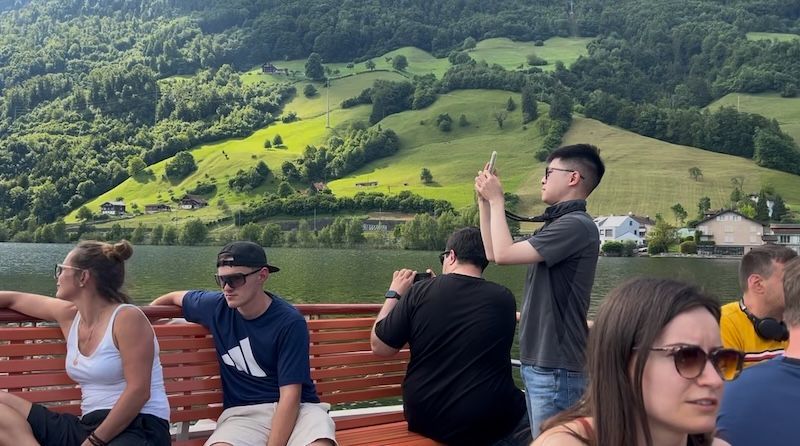
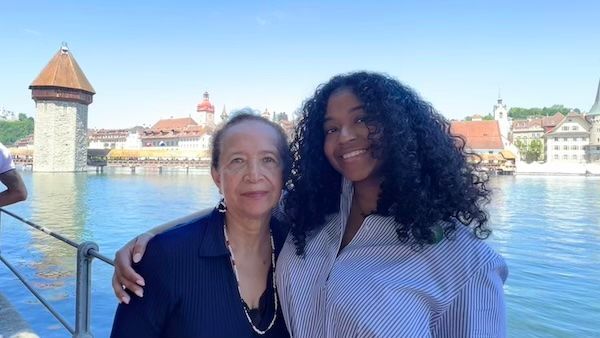
We did a one-hour boat cruise on Lake Lucerne, which was one of the most peaceful hours of the entire trip.
We made friends on that boat. In such a short time, we talked about everything from love to work to money, while still getting to take in the stunning views around us.
Mt. Pilatus was the big experience that day.
We booked through Viator, which I will talk about more in the getting around section. Even with tickets in hand, the line for the gondola was long.
We still got up there.
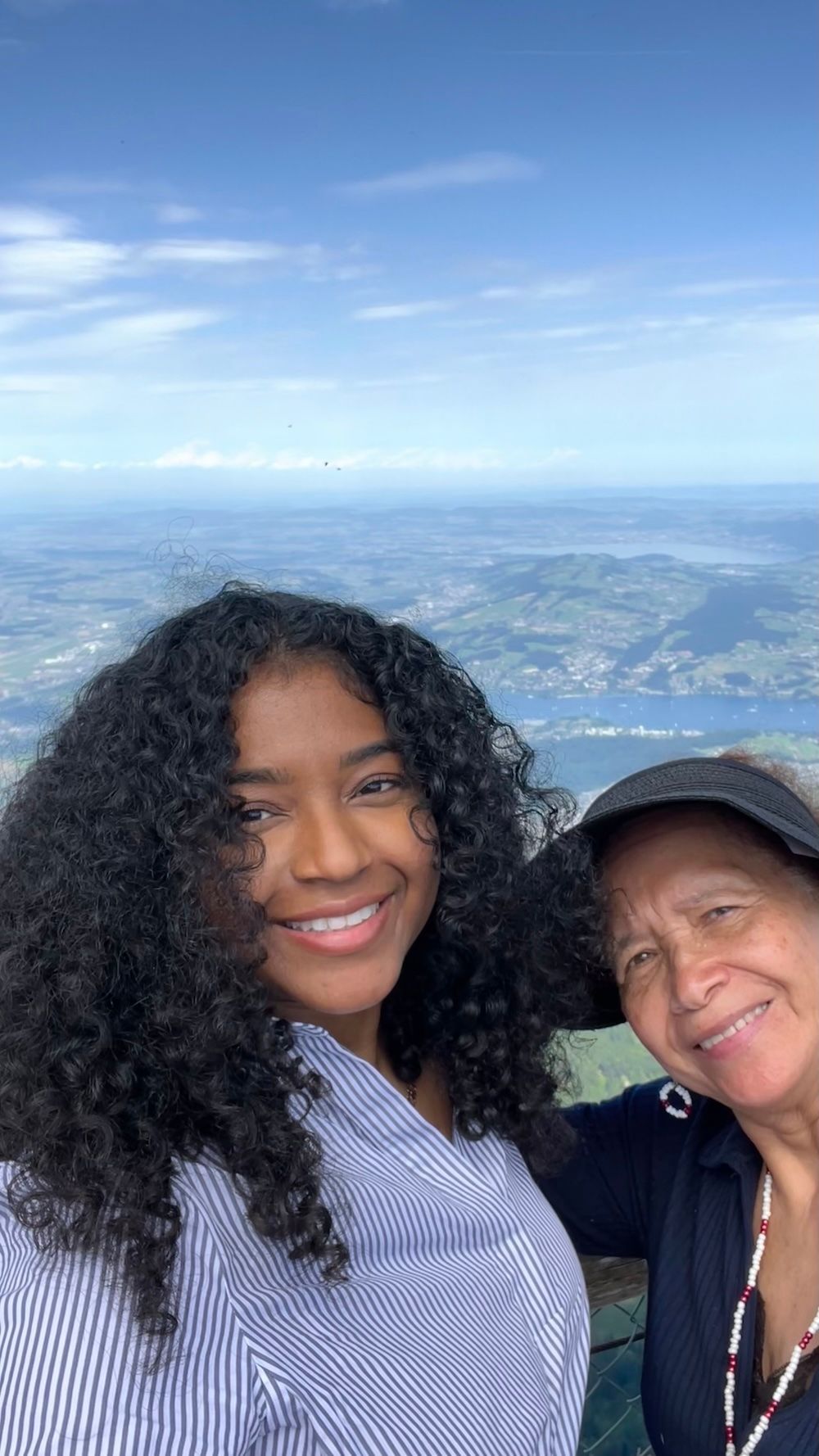
The aerial cable car to the top was worth every minute of waiting. As we ascended, I finally saw the version of Switzerland most people picture in their heads: mountains, valleys, and views that look almost too perfect to be real.
If I were doing this trip again, I would either stay overnight in Lucerne or make it the slowest day of the itinerary instead of trying to fit too much around it.
Lucerne is not a place I would rush next time.
Appenzell: The Day That Stayed With Me Most
Appenzell was the day that stayed with me the longest.
We booked a Viator day tour that covered the countryside, a cheese factory, and a chocolate factory in the Appenzell region.
I had no idea what I was walking into.
I thought it would be a pleasant tourist experience.
It ended up being one of the most genuinely beautiful things I have ever seen.
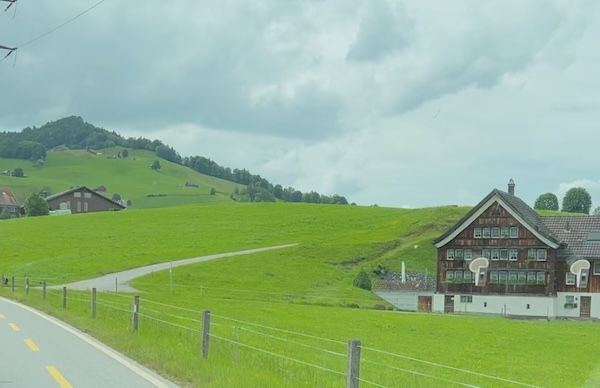
The rolling green countryside. The cows with bells. The farms that looked like they had not changed in a hundred years. The raw milk at the cheese factory. The best cheese I have ever tasted — and I promise I am not being dramatic. I still dream about that cheese, and about sitting in a barn in Switzerland with my grandmother, who looked like she had stepped into another life entirely.
The countryside photos we took that day are the ones that will stay in my memory forever.
Her standing in that field and posing was so cute.
That is the image I think of when I think about this trip.
If your idea of Switzerland is green hills, bells on cows, cheese, tiny villages, and the kind of scenery that makes everyone go quiet for a minute, Appenzell is the part of the itinerary I would protect first.
Getting Around Switzerland
Switzerland’s public transit system is genuinely impressive.
Trains run on time in a way that feels almost surreal if you are used to North American transit. Zurich’s central train station connects almost everything, and most of the tour buses we needed to catch left from there too.
We used Viator for the Appenzell day tour and for the Mt. Pilatus and Lucerne trip. Both were worth booking through them rather than trying to piece together the logistics independently.
Could we have done it ourselves?
Probably.
Would I have wanted to do that while traveling with my grandmother, managing timing, train connections, gondola lines, and my own anxiety about missing something?
No.
For this trip, paying for ease was part of the value.
We also used Uber a couple of times when tour timing made me anxious. It worked, and it was not dramatically expensive by Swiss standards.
I do not regret it.
Sometimes the peace of mind is part of what you are buying.
What I Would Do Differently
I would have gotten a Swiss Travel Pass for the full duration.
The transit options are extensive, and if you plan to use trains, boats, and public transportation frequently, the pass can make the logistics much easier.
I will break this down properly in my full getting around Switzerland post, but my short version is this: if you are planning more than one city, multiple day trips, or scenic transportation, price out the Swiss Travel Pass before you go.
Or just get it and do not worry about it.
I know that is not the most mathematically optimized answer, but this trip reminded me that peace of mind is worth a lot. When you are somewhere as expensive as Switzerland, the ability to get on the train, take the boat, or change plans without mentally calculating every single fare can be part of what makes the trip feel easier.
When to Visit Switzerland
We visited Switzerland in May, and I would recommend it without hesitation.
The countryside was an intense, vivid green. The weather was cool enough to be comfortable but warm enough that outdoor experiences like the gondola, boat cruise, and Appenzell countryside were genuinely pleasant.
The crowds were manageable.
Not empty, but not the wall-to-wall feeling of peak summer either.
The street holiday we stumbled into was also in May, so there was clearly some local festivity happening around that time. That was one of the best surprises of the trip.
Before you go, look up what is happening during your exact travel dates.
Best Months to Visit Switzerland
For a first trip, I would look at:
- May
- Early June
- September
- Early October
These shoulder-season months give you a better chance of comfortable weather, beautiful scenery, and fewer peak-season crowds.
Summer is the most popular and usually the most expensive time to visit.
Winter is beautiful for Christmas markets and skiing, but it is cold and still expensive.
Spring was right for us because it gave us the Switzerland I had imagined — green, chill, fresh, and scenic — without making the trip feel overwhelming.
The Food in Switzerland
I am going to say something that surprised me when I realized it was true: Switzerland has some of the best food standards I've been exposed to around the world.
It is fresh in a way you may not be used to if you shop from North American grocery stores.
Everything tasted like it was grown near where it was sold.
The cheese. The bread. The fruit. Even casual meals had a quality to them that would have passed for considered cooking at home.
The one thing I did not get to try was fondue.
Not because I did not want to.
And not only because of the price.
I would have paid for it if I thought we would actually eat it. But when we asked about fondue, the waiter explained that it was basically an entire meal of cheese. I was intrigued, but also a little intimidated. A full meal of melted cheese sounded like something I wanted to experience in theory, but not necessarily something my grandmother and I would finish.
And I really did not want to waste food.
So we skipped it.
I am not going to pretend I was above the price, either. Switzerland will make you pause before ordering things, and fondue was one of those moments for us. But the bigger issue was that it felt like too much food, too much cheese, and too much risk of ordering something just because it felt like the “Swiss” thing to do.
What we ate instead was still excellent.
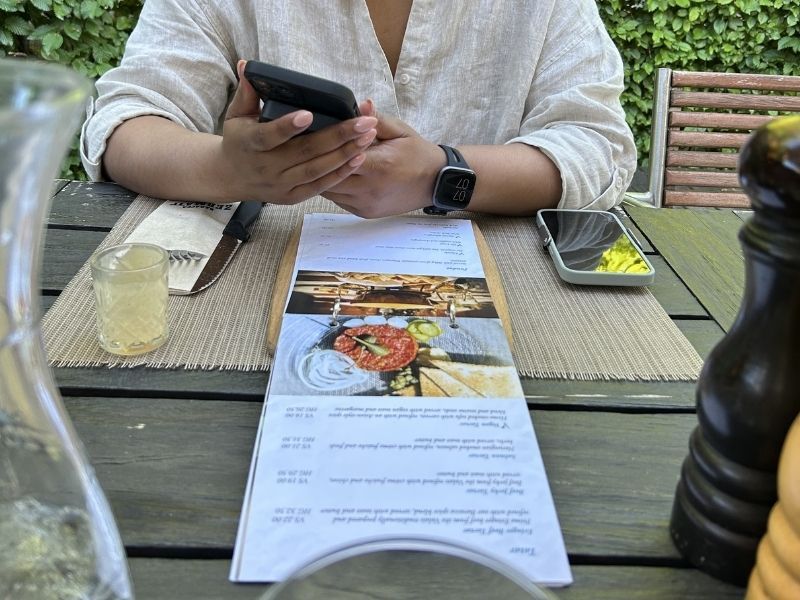
There was the Middle Eastern restaurant near our hotel that we went back to twice. The Old Inn in Zurich after the spa, which was exactly the kind of quiet, cozy, genuinely good dinner a slower travel day deserves. Street food we noticed during the local holiday. Cheese from the factory in Appenzell that I am still thinking about.
And yes, we also tried Swiss Burger King.
It cost about
$40 to $50 CAD for the two of us, which still makes me laugh because even the fast food was expensive. My grandma said she could taste the difference in quality.
Admittedly, I could not.
But it was tasty.
That pretty much sums up eating in Switzerland: even the casual meals cost more than you expect, but the food quality was consistently high enough that I rarely felt disappointed.
If you care about food quality more than huge portions or cheap meals, Switzerland is exceptional.
But you need to budget for it.
Is Switzerland Worth It When It Is This Expensive?
Here is what I know: Switzerland is the most expensive country I have ever visited.
That is not a rumor.
Water costs money. Fondue costs a lot of money. A spa day costs money. Getting around costs money. The exchange rate will humble you.
And I would go back tomorrow.
Not because I am casual about money.
Because the quality of the experience matched the cost in a way I have not always found to be true in expensive places.
Switzerland delivered on every single thing it promised.
The scenery. The calm. The food. The feeling at the end of the trip of having actually rested rather than just relocated.
For my grandmother, this trip was something she will carry for the rest of her life.
She was amazed by everything and calm about all of it, somehow at the same time. She has that rare quality of being fully present in extraordinary moments without needing to perform her reaction.
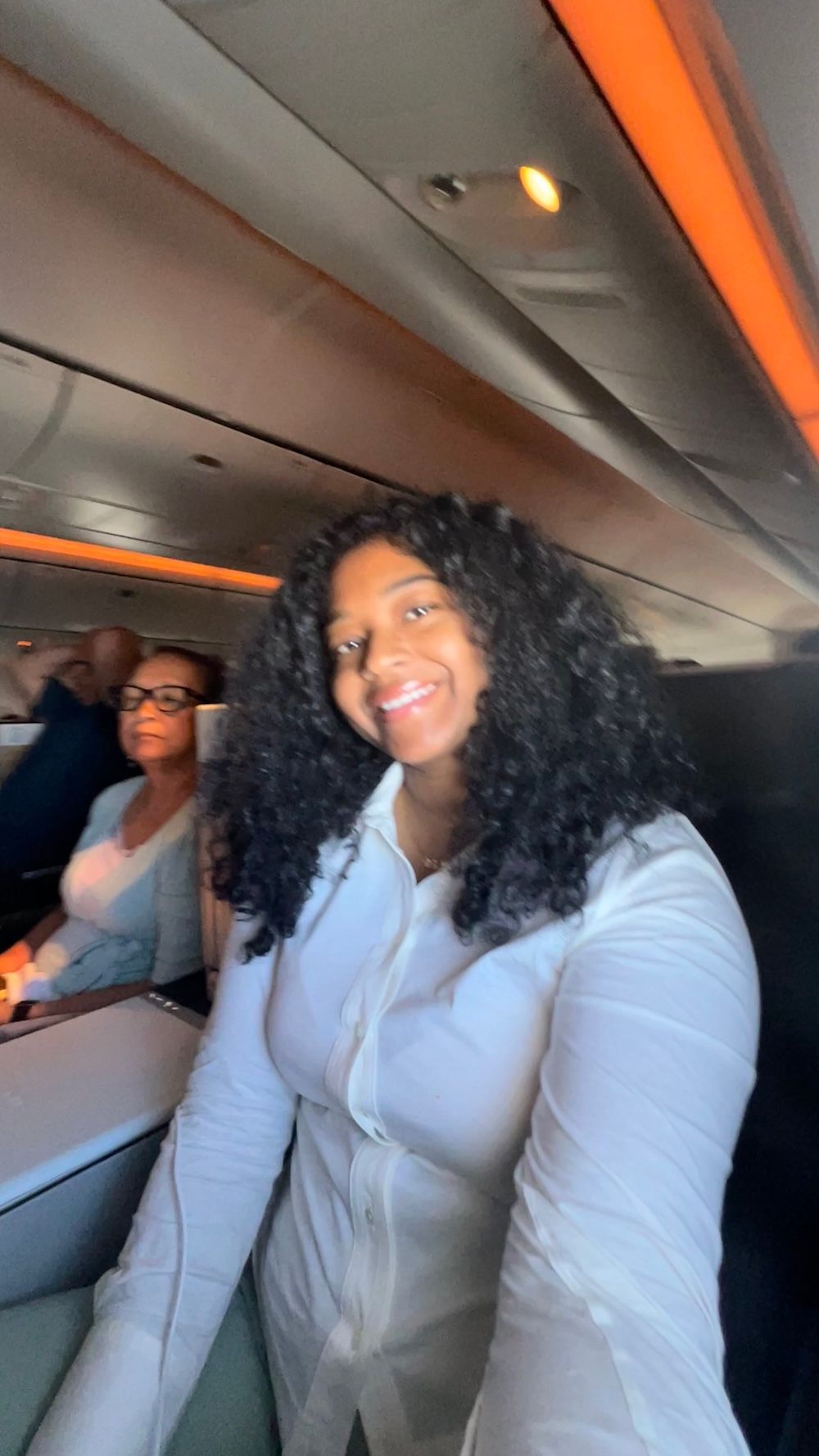
Watching her take in the countryside in Appenzell, holding that cheese, standing in the Swiss Airlines business class cabin at the start of it all — those are not moments I can put a price on.
What I can tell you is that the flight did not add to the cost the way you might expect.
What If Getting to Switzerland Was the Affordable Part?
This is the part that tends to surprise people when I talk about this trip.
I paid
$232 CAD each in taxes and fees to fly my grandmother and me to Switzerland in Swiss Airlines business class.
The country was expensive.
The flight was not.
That gap exists because I used Aeroplan points built through everyday Canadian spending on a travel credit card.
The flight to Switzerland is one of the biggest barriers people mention when they are thinking about going. Long-haul economy is genuinely brutal, especially if you have any health considerations. Business class feels aspirational to the point of unreachable for most people.
But that price gap closes fast when you understand how points work.
If you have never looked at what your current spending could already be building toward, the First Class Calculator is the fastest way to get a real answer.
The First Class Calculator shows you exactly how many points your dream trip requires, whether you want to fly economy, premium economy, business class, or first class — and how close you already are.
FAQs
Is Switzerland worth visiting for first-timers?
Yes, with realistic expectations about cost. Switzerland rewards travelers who slow down, value scenery and food quality over sightseeing volume, and are not on a tight daily budget. It is one of the calmest countries in Europe for sensitive or introverted travelers, and it delivers on every piece of its reputation. Go knowing what you are signing up for and it will not disappoint.
How much money do you need for a trip to Switzerland?
For a comfortable trip, budget at least
$200 to $300 CAD per person per day, not including flights and accommodation. This assumes regular meals, local transportation, paid experiences, and some flexibility, not a strict backpacker budget. Switzerland is consistently one of the most expensive countries in the world, and food, transportation, and experiences add up quickly. The one place Canadians can genuinely reduce costs is the flight itself by using travel rewards points.
What is the best time of year to visit Switzerland?
May through early June is excellent. The countryside is at its greenest, crowds are manageable, and the weather is comfortable for outdoor activities. We visited in May and stumbled into a local street holiday, which became one of the best unplanned moments of the whole trip. Summer is peak season with higher prices. December is beautiful for Christmas markets but cold and expensive.
Is Switzerland a good destination for introverts or sensitive travelers?
Genuinely yes. Switzerland is quieter and less chaotic than most major European destinations. The cities are calm, the natural spaces are immense, and the overall pace rewards slow travel. I have chronic pain and am sensitive to sensory overwhelm. Switzerland was one of the few international destinations where I came back feeling restored rather than depleted.
Can you fly to Switzerland without spending a fortune on flights?
If you are building Aeroplan points through everyday Canadian spending, yes. I flew Swiss Airlines business class to Zurich for
$232 CAD in taxes and fees per person, using a single Aeroplan booking that also covered getting us to Singapore on the same reservation. The First Class Calculator can show you how many points your specific trip requires and how far your current spending has already taken you.
Use the
First Class Calculator to find out how close you already are!
The Trip I Would Book Again Tomorrow
Switzerland is expensive.
That is a fact, and I am not going to soften it.
It is also one of the most beautiful, calm, and genuinely restorative places I have ever been.
I took my grandmother there. She stood in a field in Appenzell and looked like she was somewhere she had always been meant to see.
We ate the best cheese either of us had ever tasted, watched the mountains from a gondola, and drifted across Lake Lucerne on a boat with strangers who became temporary friends.
We had dinner at a small inn in Zurich after a spa day that cost less than a decent hotel room in many North American cities.
None of that required cash I did not have.
It required understanding how to use the points I was already earning.
So, is Switzerland worth visiting?
Yes.
But the better question is not whether Switzerland belongs on your list.
It does.
The question is how to make the trip feel possible.
Before you decide Switzerland is out of reach, run your numbers through the
First Class Calculator. It will show you how many points your dream route needs and whether your current spending could realistically get you there.
Ready to go deeper? Start with the
full cost breakdown of our Switzerland trip, or choose the experience you are most curious about from the guide above.