Travel rewards points in Canada let you earn points or miles on purchases, usually through credit cards. Then you can redeem these points for flights, hotels, upgrades, and other travel costs.
But if you’ve ever looked at a travel rewards credit card and wondered, “What does 60,000 points actually get me?” you’re not alone.
That is usually where beginners get stuck, because figuring out what is “worth it” can feel impossible at first.
Points can be powerful, but they are not free money. Banks and airlines offer rewards because they make money from merchant fees, annual fees, interest charges, and customer loyalty.
If you pay your credit card balance in full every month, points can help you travel better for less. If you carry a balance, the interest will usually cost more than the rewards are worth.
Quick note: this post is educational, not personalized financial advice.
Credit cards are only worth using for rewards if they fit your budget, credit situation, and ability to pay your balance in full.
That is the part a lot of people get wrong: they chase points at all costs, even when they’re taking on debt to do it.
Travel rewards are not about applying for random credit cards or chasing every welcome bonus. They work best when you understand the system, choose the right program for your goals, and only spend money you were already planning to spend.
I learned this because travel stopped feeling optional for me.
After a car accident left me dealing with chronic pain and migraines, long-haul economy flights became physically difficult. One upgrade from Egypt to Dubai showed me that premium travel was not just luxury for me.
It meant I could actually fulfill my dreams of frequent travel without the fear of totally wrecking myself in the process!
That moment is why I stopped treating points like random credit card perks and started learning them like a system.
I paid for consulting, attended conferences, tested strategies, and learned how travel rewards actually work.
I had even worked as an Investment Consultant at TD Canada Trust, advising clients on financial products, including credit cards. And I still did not understand how powerful points could be when used strategically until after I left the bank.
Since then, I have flown to Germany for $79 in taxes and fees, taken my grandmother to Switzerland and Singapore for $232 each, and covered six flights in a single year for zero dollars out of pocket.
This guide explains how travel rewards points work in Canada, the four main types of rewards programs, who points are actually worth it for, and how to choose where to start before opening a single credit card application.
What Are Travel Rewards Points?
Quick Answer: Travel rewards points in Canada are points or miles earned through credit cards, airlines, hotels, and bank loyalty programs. You can redeem them for flights, hotels, upgrades, and other travel costs. They are most valuable when you pay your credit card balance in full and use the right program for your travel goal.
Travel rewards points are a type of rewards currency earned through credit cards, airline programs, hotel programs, and bank loyalty programs.
Instead of receiving cash back, you earn points or miles that can be redeemed for travel.
In Canada, travel rewards points are commonly used for:
- flights
- hotel stays
- seat upgrades
- car rentals
- vacation packages
- statement credits for travel purchases
The basic idea is simple: spend money, earn points, and redeem points for travel.
But the value of those points depends heavily on the program.
Some points are worth a fixed amount, like one cent per point. Others can be worth much more when transferred to airline partners and used for premium cabin flights (business and first class).
That difference is where the strategy begins.
This is also why I do not like telling beginners to start with “the best travel rewards credit card in Canada” before they know what kind of trip they want. A card can look amazing on paper and still be wrong for your actual travel goal.
How Do Travel Rewards Points Actually Work?
Quick Answer: Travel rewards points work by rewarding you for everyday spending through a credit card, airline, hotel, or bank loyalty program. You earn points based on the program’s rules, then redeem them for travel through a bank portal, airline program, hotel program, transfer partner, or eligible travel statement credit.
Travel rewards points work by rewarding you for spending through a specific credit card or loyalty program.
You earn points based on the card’s earning rate, then redeem those points through a bank portal, airline program, hotel program, or transfer partner.
For example, a card might earn:
- 1 point per dollar on regular purchases
- 2 points per dollar on groceries
- 3 points per dollar on dining
- bonus points after meeting a minimum spend requirement
Once you earn the points, you can redeem them based on the rules of that program.
Some programs let you apply points directly against travel purchases. Others let you book flights through airline partners. Some give you a fixed value. Others give you flexible value depending on the route, cabin, and availability.
This is why two people can earn the same number of points and get completely different results.
One person might redeem 75,000 points for $750 in travel credit. Another person might use 75,000 points for a business class flight that would have cost thousands of dollars in cash.
Same number of points.
Very different outcome.
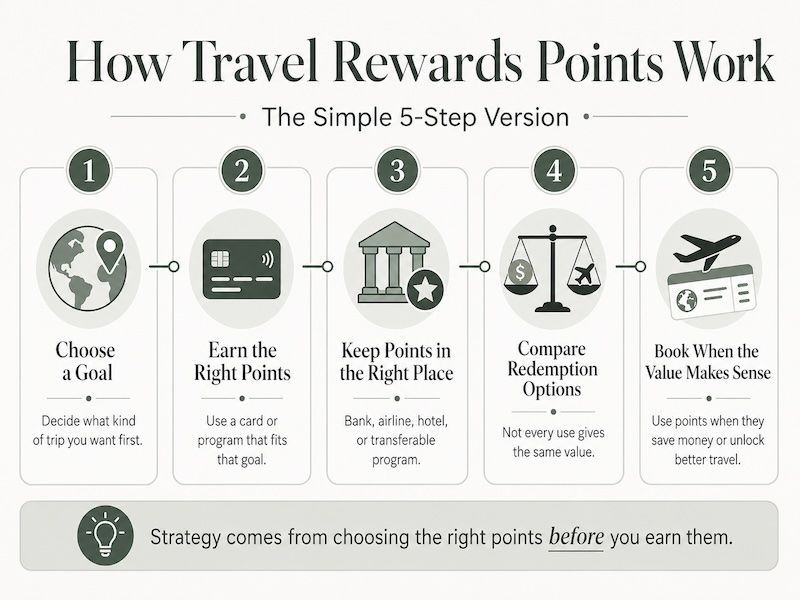
The Simple 5 Step Version
If you are brand new to travel rewards points in Canada, think of the system like this:
- Choose a goal.
Decide what you want to use your points for before choosing a card. - Earn the right type of points.
Use a travel rewards credit card or loyalty program that earns points connected to that goal. - Keep the points in the right place.
Your points may live in a bank program, airline account, hotel account, or transferable points program. - Compare redemption options.
Do not assume every redemption gives the same value. - Book when the value makes sense.
Use your points for travel when they save you money or unlock an experience you would not otherwise pay cash for.
That is the basic answer to how credit card points work for travel.
The real strategy comes from choosing the right points before you earn them.
I would rather see a beginner earn fewer points with a clear plan than collect six different points currencies they do not know how to use.
Are Travel Rewards Points Worth It in Canada?
Quick Answer: Travel rewards points are worth it in Canada if you pay your credit card balance in full every month, have stable spending, and choose a rewards program that matches your travel goals. They are usually not worth it if you carry credit card debt because interest charges can cost more than the points are worth.
Travel rewards points can be worth it in Canada if you pay your credit card balance in full, have stable spending, and choose a program that matches your travel goals.
They are usually not worth it if you carry credit card debt.
Most rewards credit cards charge high interest rates. If you carry a balance, the interest can quickly erase the value of any points you earn.
In that situation, focusing on debt repayment, lower-interest products, and financial stability should come first.
Points will still be here when you are ready.
Travel rewards work best for people who:
- already use a credit card responsibly
- pay the full balance every month
- have predictable monthly spending
- want to travel within the next 12 to 24 months
- are willing to learn the basics before applying for cards
They are especially powerful for people who want premium travel without paying premium cash prices.
For me, that was the turning point. I was not trying to become a luxury traveler for the sake of luxury. I wanted flights that did not wreck my body for days after I landed.
That is why I care so much about strategy.
The goal is not to earn the most points possible. The goal is to earn the right points for the trip you actually want.
The 4 Types of Travel Rewards in Canada
Quick Answer: The four main types of travel rewards in Canada are cash back, bank proprietary points, loyalty program points, and transferable points. Cash back is the simplest, bank points are usually easy to redeem, loyalty points are tied to specific airline or hotel programs, and transferable points are often the most flexible.
Not all travel rewards points are equal.
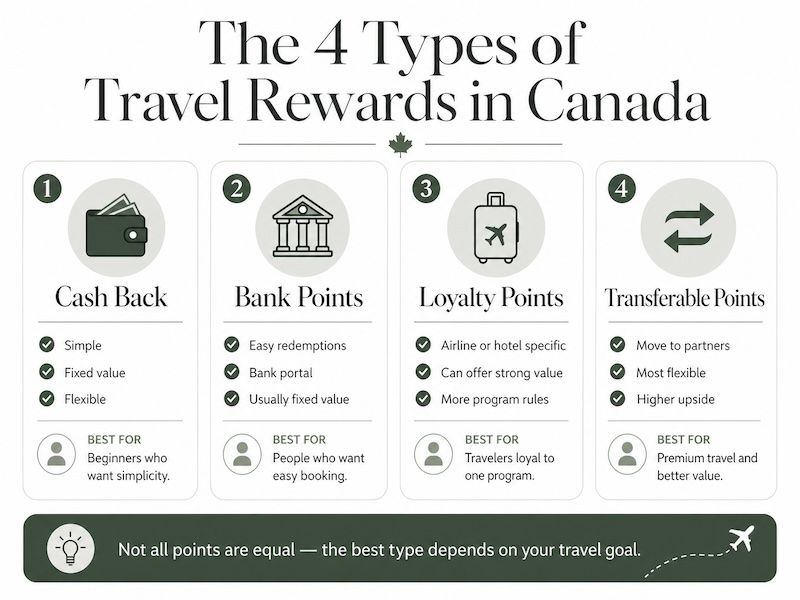
In Canada, most rewards fall into four categories:
- cash back
- bank proprietary points
- loyalty program points
- transferable points
Understanding the difference is one of the most important things you can do before choosing a travel rewards credit card.
1. Cash Back
Cash back gives you a percentage of your spending back as money. It is simple, flexible, and easy to understand.
For example, if your card earns 2% cash back and you spend $1,000, you earn $20 back.
Cash back is great if you want simplicity. The value is clear, and you are not tied to a specific airline or hotel program.
The downside is that cash back has a fixed ceiling.
If a business class flight costs $8,000, you need $8,000 in cash back to cover it. That makes cash back useful for reducing travel costs, but less powerful for unlocking premium flights.
I do not hate cash back for beginners. For someone who feels overwhelmed by points, cash back can be a safe first step.
But once I started comparing cash back against the actual flights I wanted to take, I realized it capped my upside fast.
Best for: people who want simplicity, flexibility, and no complicated redemption rules.
2. Bank Proprietary Points
Bank proprietary points are rewards earned through a bank’s own loyalty program.
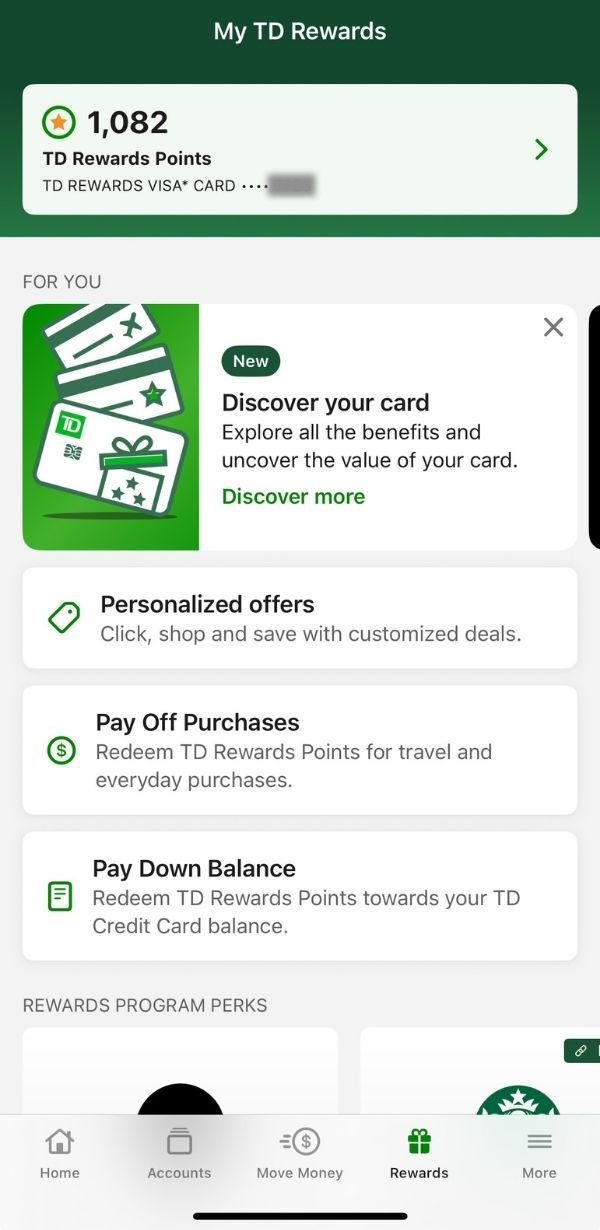
In Canada, examples include TD Rewards, CIBC Aventura, RBC Avion, and Scene+.
These points are often easy to use because you can redeem them through the bank’s travel portal or apply them toward eligible purchases.
Many bank points have a relatively fixed value. For example, some programs value points around one cent per point when redeemed for travel.
That makes them straightforward, but it can also limit upside.
If your points are worth one cent each, 75,000 points equals about $750 in travel value. That is useful, but it probably will not unlock a lie-flat business class seat on its own.
This is where a lot of beginners get confused. They hear someone say they booked a $5,000 flight with points, then assume all points work that way.
They do not.
A fixed-value bank point and a transferable point used strategically through an airline partner are not the same thing.
Best for: people who want easy redemptions and do not want to learn airline award charts or transfer partners.
3. Loyalty Program Points
Loyalty program points are earned directly with a specific airline or hotel program.
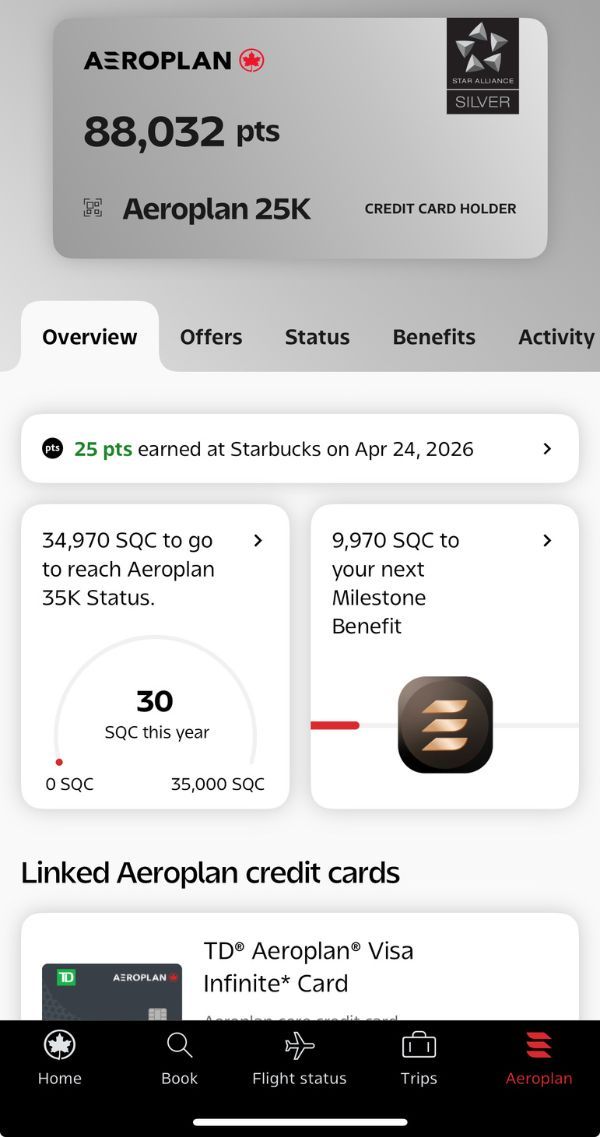
Examples include Air Canada Aeroplan points, Marriott Bonvoy points, WestJet Rewards, and Hilton Honors.
These programs can offer stronger value than fixed bank points, especially when used for flights or hotel stays that would be expensive in cash.
For example, Aeroplan points can be used for Air Canada flights and partner airline flights through Star Alliance and other partners. That means you are not limited only to Air Canada-operated routes.
The tradeoff is that you are working inside one program’s rules.
Availability, fees, partner access, and redemption prices can vary.
This is the part I wish more beginners understood before collecting points. A loyalty program can be incredibly valuable, but only if it matches where you actually want to go.
If you live somewhere with limited routes, or you usually fly from a smaller Canadian airport, your strategy may look very different from someone based in Toronto, Vancouver, or Montreal.
Best for: people who already know which airline or hotel program matches their travel habits.
4. Transferable Points
Quick Answer: Transferable points are often the most flexible travel rewards points because you can move them from a credit card rewards program to eligible airline or hotel partners. This can make them especially useful for booking flights, premium cabins, or higher-value redemptions.
Transferable points are often the most flexible and powerful type of travel rewards points.
You earn them through a credit card program, then transfer them to airline or hotel partners when you are ready to book.
In Canada, major transferable points programs include American Express Membership Rewards and RBC Avion.
Transferable points are valuable because they give you options.
Instead of locking yourself into one airline program immediately, you can wait until you know which partner has the best redemption for your trip.
Think of transfer partners as the booking programs your points can move into. You do not need to understand all of them today.
The key idea is that transferable points keep your options open until you know which program works best for your trip.
For example, depending on the card program, you may be able to transfer points to programs like:
- Aeroplan
- Air France KLM Flying Blue
- British Airways Executive Club
- Cathay Pacific Asia Miles
- Marriott Bonvoy
- other airline or hotel partners
This flexibility can create outsized value.
A flight that costs thousands of dollars in cash might be bookable for a much smaller number of points through the right airline partner. That is why transferable points are often the best starting place for people who want international premium cabin travel.
This is also where Amex points can be useful for flights. American Express Membership Rewards can transfer to certain airline partners, but the best transfer depends on your route, cabin, dates, and award availability.
That is a whole strategy on its own, which is why I would not try to learn every Amex transfer partner in your first week.
Start with the trip.
Then figure out which points can get you there.
Best for: people who want flexibility, premium travel, and higher-value redemptions.
Why Not All Points Are Worth the Same
Quick Answer: Not all travel rewards points are worth the same amount. Some points have a fixed value, such as one cent per point, while others can be worth more when used for flights, hotels, or premium travel redemptions. The value depends on the program and how you redeem the points.
Points are not worth the same amount across programs.
Their value depends on how you redeem them.
A point used for a gift card might be worth less than one cent. A point used for a fixed travel credit might be worth around one cent. A point used for a strong airline redemption could be worth several cents.
That is why “how many points do I need?” is not the full question.
The better question is:
“What kind of points do I need for the trip I actually want?”
This is also why redeeming airline points for gift cards is usually a weak use of points.
It may feel easy, but it often gives up the value that makes travel rewards powerful in the first place.
I know because I made that mistake early.
I once used Aeroplan points for a gift card because I did not understand how valuable they could be for flights. I would not make that redemption today.
At the time, I thought I was being practical. I had points, I saw a redemption option, and I used it.
Now I know that ease and value are not always the same thing.
That is one of the biggest lessons I want beginners to take from this post: just because you can redeem points a certain way does not mean you should.
Why Do Banks and Airlines Offer Travel Rewards?
Banks and airlines offer travel rewards because loyalty programs are profitable.
They encourage spending, build customer loyalty, and generate revenue through merchant fees, annual fees, interest charges, and program partnerships.
This is not generosity.
It is business.
Every time you use a credit card, the merchant pays a processing fee. Banks also make money from annual fees, foreign transaction fees, late fees, and interest from people who carry balances.
Airlines benefit because points encourage customers to stay loyal to their network. Banks benefit because rewards cards make people more likely to spend on their products.
That does not make points bad.
It just means you need to understand the rules.
You are either using the system intentionally, or the system is using you.
The goal is simple: spend only what you were already going to spend, pay your balance in full, and earn rewards from money already moving through your life.
That is why I never recommend opening a card just because the welcome bonus looks exciting.
A big bonus attached to the wrong strategy can still be a bad starting point.
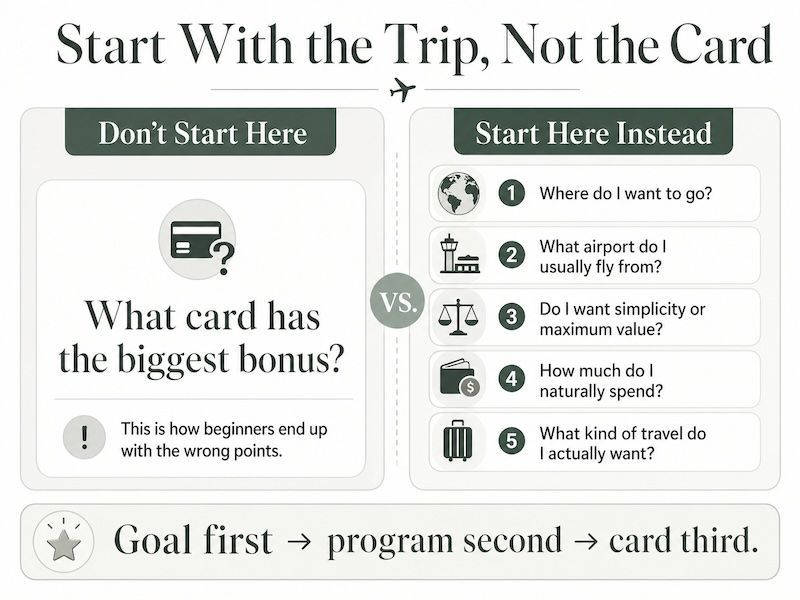
How to Start With Travel Rewards Points in Canada
Quick Answer: The best way to start with travel rewards points in Canada is to choose your travel goal before choosing a credit card. Decide where you want to go, what airport you usually fly from, what kind of travel you want, and whether you prefer simple redemptions or maximum value.
The best way to start with travel rewards points is to choose your travel goal before choosing a credit card.
Most people do this backwards.
They apply for a card because they saw a big welcome bonus, liked the bank, or heard someone online recommend it.
But the right card depends on the trip you want.
Before I recommend any card, I look at the trip, the route, the spending pattern, and the points program.
That is the difference between collecting points and having a plan.
Start with these questions.
1. Where Do You Want to Travel?
Your destination determines which points are useful.
A person who wants to fly from Toronto to Paris may need a different strategy than someone who wants to fly from Calgary to Vancouver or from Halifax to Tokyo.
Before looking at credit cards, choose one realistic travel goal.
For example:
- “I want to fly business class to Europe.”
- “I want to visit Japan in the next two years.”
- “I want to cover domestic flights within Canada.”
- “I want to take my parents on one big international trip.”
The clearer your goal, the easier it is to choose the right program.
This is what changed everything for me. Once I stopped asking, “What card has the best bonus?” and started asking, “What flight am I trying to book?” the entire process became less overwhelming.
2. What Airport Do You Usually Fly From?
Your home airport matters more than most beginners realize.
If you live in Toronto, Vancouver, or Montreal, you may have access to more direct international routes and airline partners.
If you live in a smaller city, your options may depend heavily on Air Canada, WestJet, Porter, Flair, or a connecting airport.
For example, someone in Calgary may care more about WestJet than someone in Toronto. Someone in New Brunswick may have fewer airline options and need to plan around available routes.
Your best points strategy should match the flights you can actually take.
This matters a lot in Atlantic Canada.
A strategy that looks perfect for someone in Toronto can fall apart when your real trip starts with a positioning flight. I always want to know where someone is actually starting from before deciding which points make sense.
3. Do You Want Simplicity or Maximum Value?
There is usually a tradeoff between simplicity and maximum value.
Cash back and fixed-value bank points are easier to understand. Transferable points and airline programs can unlock better value, but they require more learning.
Neither option is automatically better.
If you want a simple way to reduce travel costs, fixed-value points may be enough.
If you want international business class flights, lie-flat seats, or premium cabins without paying premium cash prices, you will likely need to learn transferable points and airline loyalty programs.
I would not push a complete beginner into the most complicated strategy if they are still nervous about using a rewards card at all.
But I also would not tell someone dreaming of business class to rely only on basic cash back.
The right answer depends on the goal.
4. How Much Do You Naturally Spend?
Travel rewards work best when you earn points from spending you were already going to do.
That can include groceries, gas, dining, recurring bills, insurance, or business expenses, depending on the card and merchant acceptance.
The key word is
already.
Do not spend more just to earn points.
If a welcome bonus requires a minimum spend, make sure you can meet it comfortably with normal expenses.
A card bonus is not worth buying things you do not need.
This is one of the most common mistakes I see beginners make. They get excited about the bonus and forget to ask whether the spending requirement fits their actual life.
Points should support your budget.
They should not distort it.
5. What Kind of Travel Do You Actually Want?
Some people want as many free economy flights as possible.
Some want one big luxury trip.
Some want to visit family more often.
Some want hotel stays.
Some want upgrades because economy is physically difficult.
Those are different goals, and they may require different points strategies.
For me, premium cabins matter because of pain, migraines, and accessibility. That does not mean everyone needs to chase business class.
It means your strategy should fit your real reason for traveling.
If your goal is to take your kids to Disney, your points plan will look different from someone who wants a lie-flat seat to Singapore.
Neither is wrong.
But they are not the same strategy.
If you already have points and do not know what they can realistically get you, start by calculating your target trip before choosing another card.
Use the
First Class Calculator to see how many points your dream flight may require before applying for another card
What Is the Best Way to Use Credit Card Points to Travel?
Quick Answer: The best way to use credit card points to travel is to match your points to a specific trip. Choose your destination, decide what cabin you want to fly, check which airlines serve the route, then earn points that can be used with the right airline, hotel, or transfer partner.
The best way to use credit card points to travel is to match the points to a specific trip.
For beginners, that usually means choosing one travel goal, figuring out which program can book that trip, then earning points that transfer to or work with that program.
A simple process looks like this:
- Choose your destination.
- Decide whether you want economy, premium economy, business class, or first class.
- Check which airlines fly that route.
- Identify which points programs can book those airlines.
- Earn the points that give you the best combination of flexibility and value.
- Compare the points cost, taxes, fees, and cash price before booking.
This is how to use credit card points to travel strategically instead of randomly.
The mistake is collecting points first and trying to find a use for them later.
I have done that, and it is frustrating.
You end up with points scattered across programs, not enough for the flights you want, and no clear next step.
A goal-first strategy avoids that.
What Is the Best Travel Rewards Credit Card in Canada?
Quick Answer: There is no single best travel rewards credit card in Canada for everyone. The best card depends on your travel goal, home airport, spending habits, preferred airlines, and whether you want simple redemptions or maximum value. Start with the trip first, then choose the points program and card that can help you book it.
There is no single best travel rewards credit card in Canada for everyone.
The best card depends on:
- your travel goals
- your home airport
- your monthly spending
- your preferred airlines
- whether you travel domestically or internationally
- whether you want simplicity or maximum value
- whether you pay your balance in full every month
Anyone who gives one universal answer is skipping the most important part: your strategy.
The right process is:
- choose your travel goal
- identify the best loyalty program for that goal
- choose the card that earns those points efficiently
- use the card only for planned spending
- pay the balance in full every month
That is how points become a tool instead of a trap.
This is also why I do not like “best card” lists as a starting point for beginners.
They can be useful once you know what you are looking for. But if you do not know whether you need Aeroplan points, Amex Membership Rewards, RBC Avion points, WestJet dollars, hotel points, or cash back, a best-card list can send you in the wrong direction.
Do Travel Rewards Points Expire?
Quick Answer: Travel rewards points can expire depending on the program. Airline and hotel points often require account activity within a certain period, while bank points may stay active as long as your account is open and in good standing. Always check the expiry rules for each program you use.
Travel rewards points can expire, depending on the program.
Many airline and hotel programs require account activity within a certain period to keep points active.
Activity can include:
- earning points
- redeeming points
- using a shopping portal
- making a small purchase with a linked credit card
- transferring points from an eligible partner
Bank points may be tied to your credit card account and may remain active as long as the account is open and in good standing.
The safest habit is to check your loyalty accounts regularly and understand each program’s expiry policy.
I recommend beginners keep a simple note with the programs they belong to, approximate points balances, and any expiry rules.
You do not need a complicated spreadsheet at the beginning.
You just need to know what you have and when you might lose it.
Common Beginner Mistakes With Travel Rewards Points
Travel rewards points can feel overwhelming at first, but most beginner mistakes come from skipping the strategy step.
Here are the big ones to avoid.
Applying for a Card Before Choosing a Goal
This is the most common mistake.
A card can have a huge welcome bonus and still be the wrong card for your trip.
Before applying, ask:
“What trip am I trying to book, and do these points help me get there?”
Redeeming Points for Low Value Options
Gift cards, merchandise, and statement credits can be easy, but they are often not the best value.
That does not mean you can never use them.
It means you should understand the tradeoff before redeeming.
I used Aeroplan points for a gift card early on because I did not know better. Now I would save those points for flights instead.
Ignoring Taxes and Fees
Points do not always make a flight completely free.
You may still pay taxes, carrier surcharges, airport fees, or booking fees.
That does not mean the redemption is bad, but you need to compare the full cost.
A flight that costs 70,000 points plus $900 in fees may not be as good as it looks.
Earning Points You Cannot Easily Use
A points program is only useful if it helps you book travel you actually want.
If you live near an airport with limited airline options, or you have strict travel dates, some programs may be harder to use than others.
This is why your home airport and travel flexibility matter.
Spending More to Earn Points
Never buy things you do not need just to earn rewards.
If you would not have spent the money without the points, the points are not really free.
They are a rebate on spending, not a reason to overspend.
Final Thoughts: Travel Rewards Are a System
Travel rewards points are not just for frequent flyers, finance experts, or people with unlimited money.
They are a system.
And like any system, they work best when you understand the rules before you start.
You now know the four main types of rewards in Canada: cash back, bank points, loyalty program points, and transferable points.
You know why transferable points can be powerful, why not all redemptions are equal, and why carrying credit card debt makes points a bad trade.
Most importantly, you know that the right starting point is not a credit card application.
It is your goal.
Once you know where you want to go, how you want to fly, and what programs can get you there, the card decision becomes much easier.
If you are ready to figure out how many points you need for your dream trip, use the
First Class Calculator to map your destination, cabin, and points target before applying for anything.
And if you want to build a full strategy from goal to redemption, start with the
T.R.I.P. System.